

Data snapshot - Working in heat
Background
Working in heat can be hazardous and can affect workers in both indoor and outdoor environments. Working outdoors in the warmer months carries increased risk of UV exposure.
Persons conducting a business or undertaking (PCBUs) have a duty to identify and manage the risks of heat in the workplace. Heat-related risks include:
- heat stress
- heatstroke
- burns
- skin cancer
- accidents due to reduced concentration
- heat rash.
Workers may be particularly susceptible to heat-related risks if the following are present:
For outdoor workplaces:
- workers exposed to high temperatures (e.g., above 30 degrees Celsius) and/or high levels of humidity
- higher levels of humidity can increase the risk of heat stroke even at lower temperatures
- workers working outdoors when the ultraviolet (UV) radiation index is 3 or above
- direct sun exposure
- inadequate acclimatation (e.g., new workers or workers returning from leave).
For indoor workplaces:
- high levels of heat/humidity inside the workplace
- history of related illness occurring at the workplace
- surfaces or equipment that produce, radiate or reflect heat and/or ultraviolet rays
- workers are engaged in physical tasks (including prolonged standing)
- any plant or equipment that produces heat or steam
- poorly ventilated work areas with little airflow
- any non-insulated walls/ceiling spaces of the workplace exposed to direct sunlight
- pregnant workers, or workers with health issues that may impact their heat tolerance
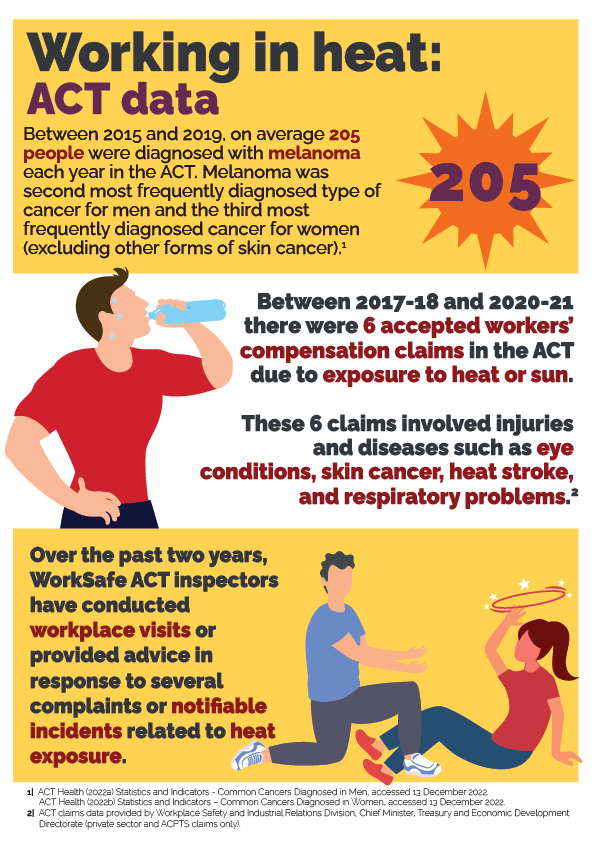
Download the infographic version of this snapshot here:
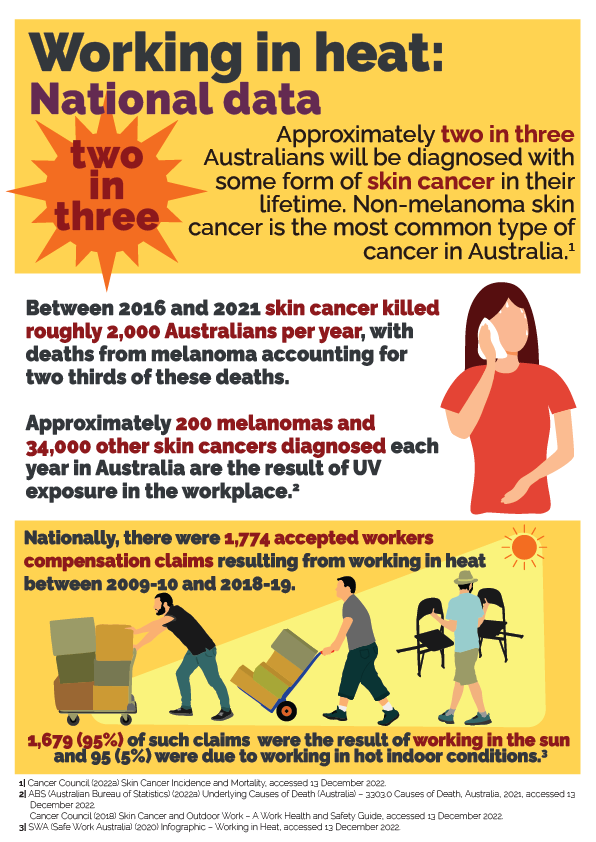
National data
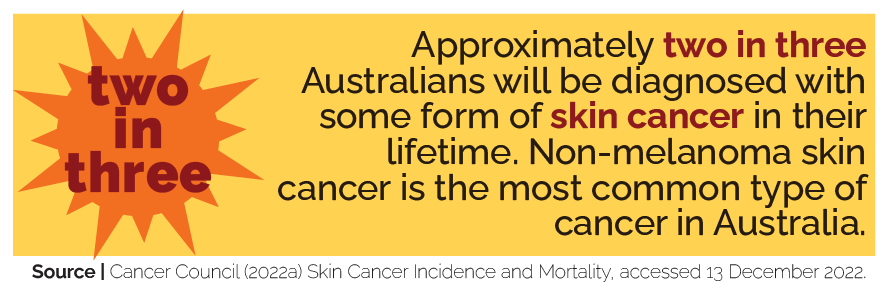
Approximately two in three Australians will be diagnosed with some form of skin cancer in their lifetime. Non-melanoma skin cancer is the most common type of cancer in Australia (Cancer Council 2022a). Most skin cancers, including up to 95% of melanomas, are due to exposure to UV radiation (Cancer Council 2022b).
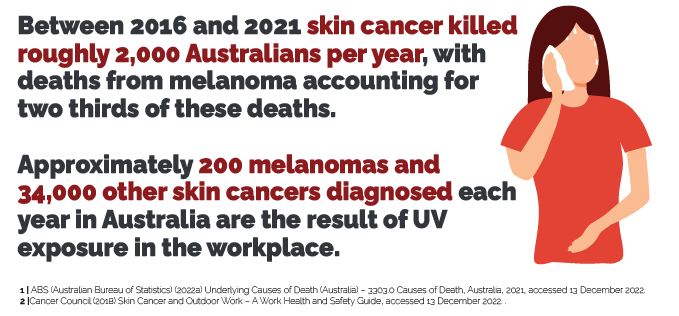
Between 2016 and 2021 skin cancer killed roughly 2,000 Australians per year, with deaths from melanoma accounting for two thirds of these deaths (ABS 2022a). It is estimated that approximately 200 melanomas and 34,000 other skin cancers diagnosed each year in Australia are the result of UV exposure in the workplace (Cancer Council Australia 2018). People who work outdoors are more likely than those who work indoors to develop non-melanoma skin cancer (Cancer Council 2022b).
A Safe Work Australia (SWA) survey focused on Australian workers’ exposure to carcinogens found that 64% of construction workers and 79% of agriculture workers had high levels of exposure to UV radiation, calculated based on the time workers spent outside and their use of protections like sunscreen and wearing a hat (SWA 2016a; SWA 2016b).
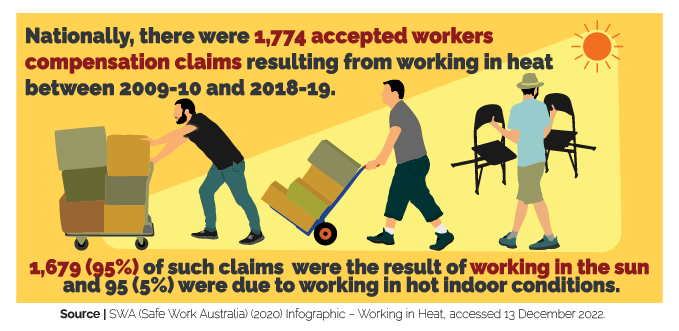
Nationally, there were 1774 accepted workers compensation claims resulting from working in heat between 2009-10 and 2018-19. 1679 (95%) of such claims were the result of working in the sun and 95 (5%) were due to working in hot indoor conditions. Of those claims resulting from sun exposure, 940 were cancer-related and 441 were related to heat stroke or heat stress (SWA 2020). Sun exposure was responsible for more than half of all accepted workers’ compensation claims for cancer or benign tumours between 2000-01 and 2011-12 (Cancer Council 2015).
ACT data
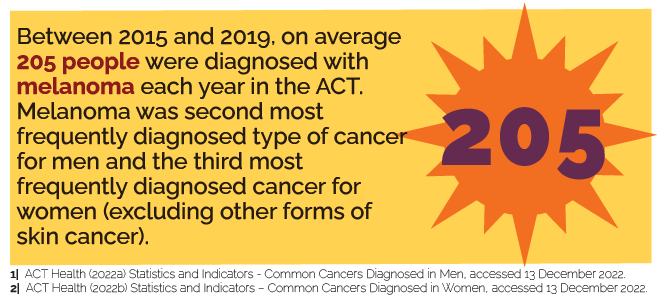
Between 2015 and 2019, on average 205 people were diagnosed with melanoma each year in the ACT. Melanoma was second most frequently diagnosed type of cancer for men and the third most frequently diagnosed cancer for women (excluding other forms of skin cancer)[1] (ACT Health 2022a; ACT Health 2022b). Approximately 30 people in the Territory died from skin cancer each year between 2016 and 2021. More than two-thirds of these deaths were from melanoma (ABS 2022).
Between 2017-18 and 2020-21 there were 6 accepted workers’ compensation claims in the ACT due to exposure to heat or sun. These 6 claims involved injuries and diseases such as eye conditions, skin cancer, heat stroke, and respiratory problems.
WorkSafe ACT’s response
Over the past two years, WorkSafe ACT inspectors have conducted workplace visits or provided advice in response to several complaints or notifiable incidents related to heat exposure.
 WorkSafe ACT’s Construction Team has integrated questions about exposure to UV radiation into the checklist used by the team when inspecting worksites.

WorkSafe ACT has also published a guide to managing the risk of heat on its website.
Resources for PCBUs and workers
WorkSafe ACT, Working in Heat
Safe Work Australia, Guide for Managing the Risks of Working in Heat
Cancer Council Australia, Skin Cancer and Outdoor Work – A Work Health and Safety Guide
References
ACT claims data provided by Workplace Safety and Industrial Relations Division, Chief Minister, Treasury and Economic Development Directorate (private sector and ACPTS claims only).
ABS (Australian Bureau of Statistics) (2022a) Underlying Causes of Death (Australia) – 3303.0 Causes of Death, Australia, 2021, accessed 13 December 2022.
ABS (2022b), Underlying Causes of Death (Australian Capital Territory) – 3303.0 Causes of Death 2021, accessed 13 December 2022.
ACT Health (2022a) Statistics and Indicators - Common Cancers Diagnosed in Men, accessed 13 December 2022.
ACT Health (2022b) Statistics and Indicators – Common Cancers Diagnosed in Women, accessed 13 December 2022.
Cancer Council (2022a) Skin Cancer Incidence and Mortality, accessed 13 December 2022.
Cancer Council (2022b) Risk Factors/Epidemiology, accessed 13 December 2022.
Cancer Council (2018) Skin Cancer and Outdoor Work – A Work Health and Safety Guide, accessed 13 December 2022.
Cancer Council (2015) Occupational Exposures to Carcinogens in Australia: Workers’ Compensation Claims Paid in Australia 2000–2012, accessed 13 December 2022.
Cancer Council ACT (n.d.) Skin Cancer in the ACT, accessed 13 December 2022.
SWA (Safe Work Australia) (2020) Infographic – Working in Heat, accessed 13 December 2022.
SWA (2016a) The Australian Work Exposure Study (AWES): Carcinogen Exposure in the Construction Industry, accessed 13 December 2022.
SWA (2016b) The Australian Work Exposure Study (AWES): Carcinogen Exposure in the Agriculture Industry, accessed 13 December 2022.
On this page